—
Smallholding at Nesjestranda
Nesjastranda, Norway
2025
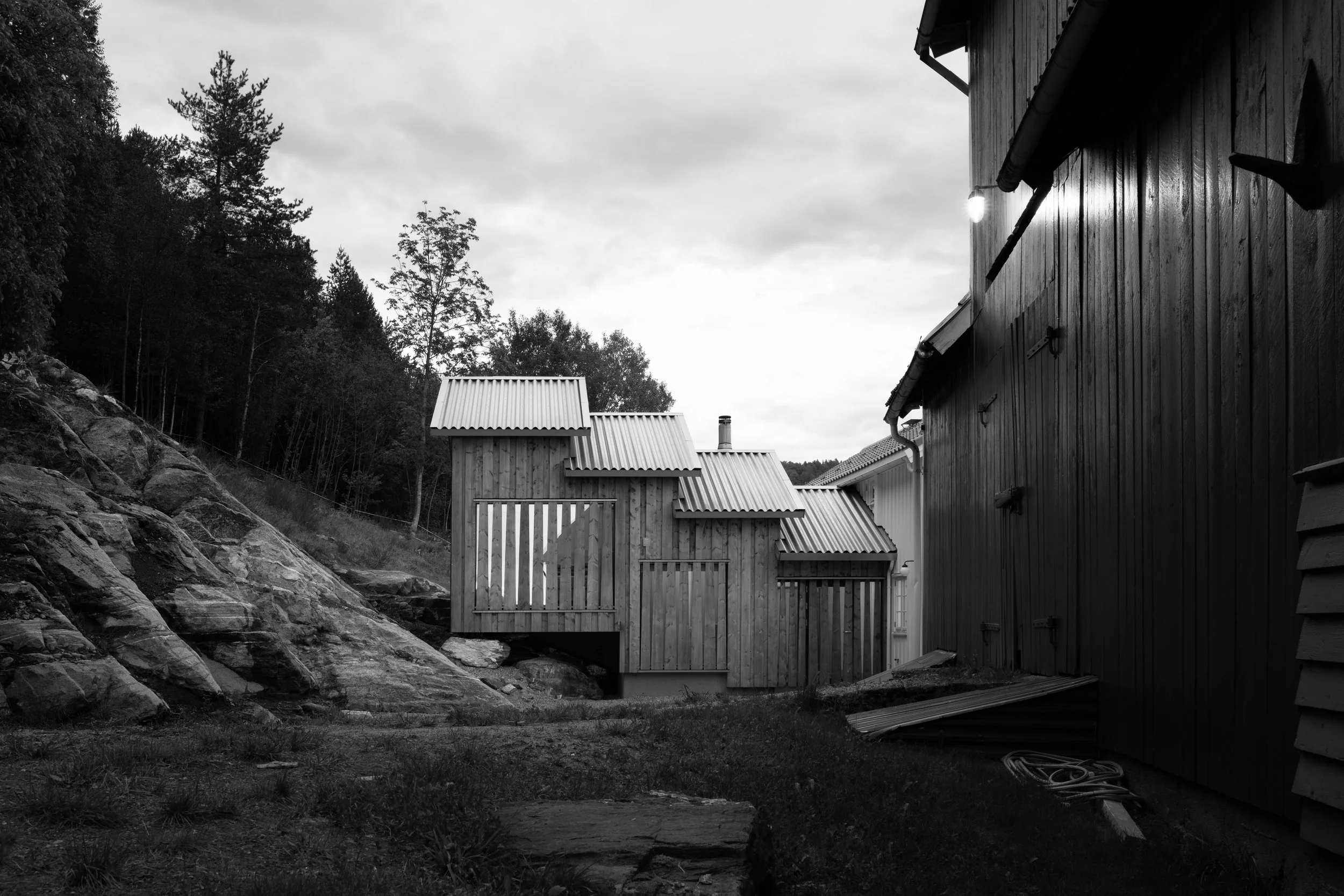
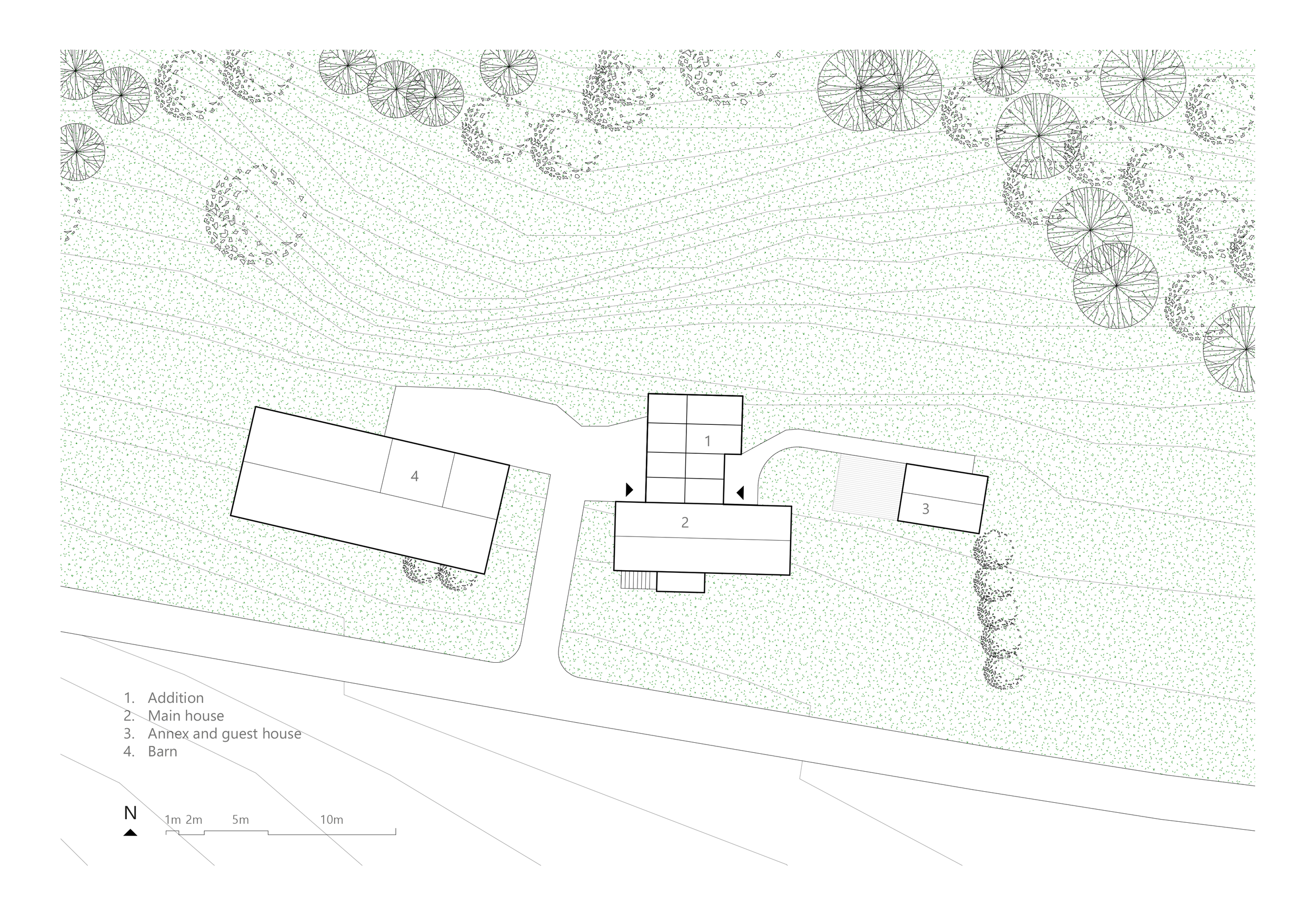
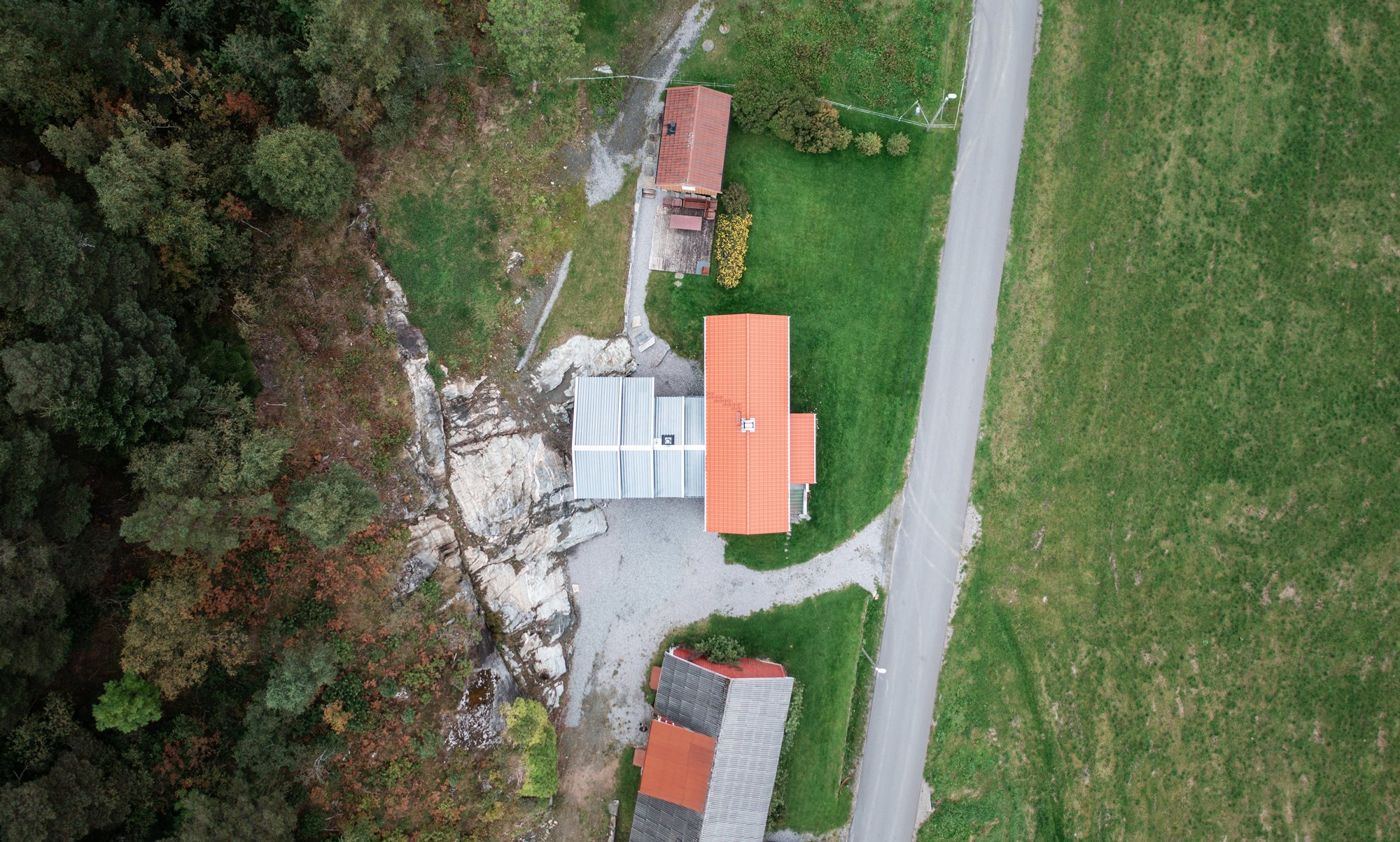
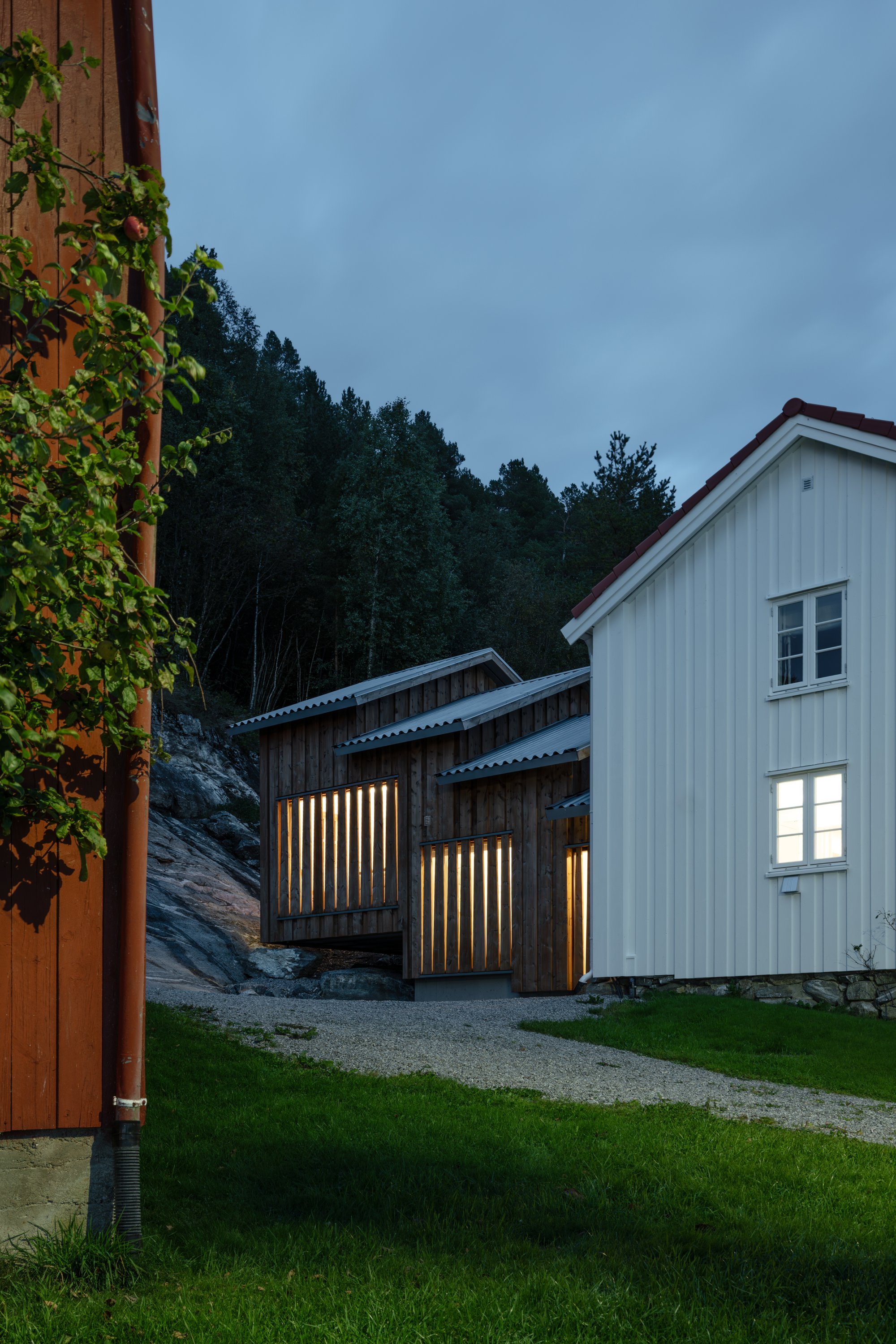
The project is an extension and remodeling of a smallholding on the northwest coast of Norway, where a white main house and a red barn form the original cluster. Set slightly behind the main house and discreetly hidden from the road, the new volume adds bedrooms, bathrooms, and a new entrance. Positioned between the existing buildings and the sloping terrain, the extension mediates between openness and enclosure — connecting the garden to the east with the courtyard to the west, while reinforcing the courtyard’s sheltered character.
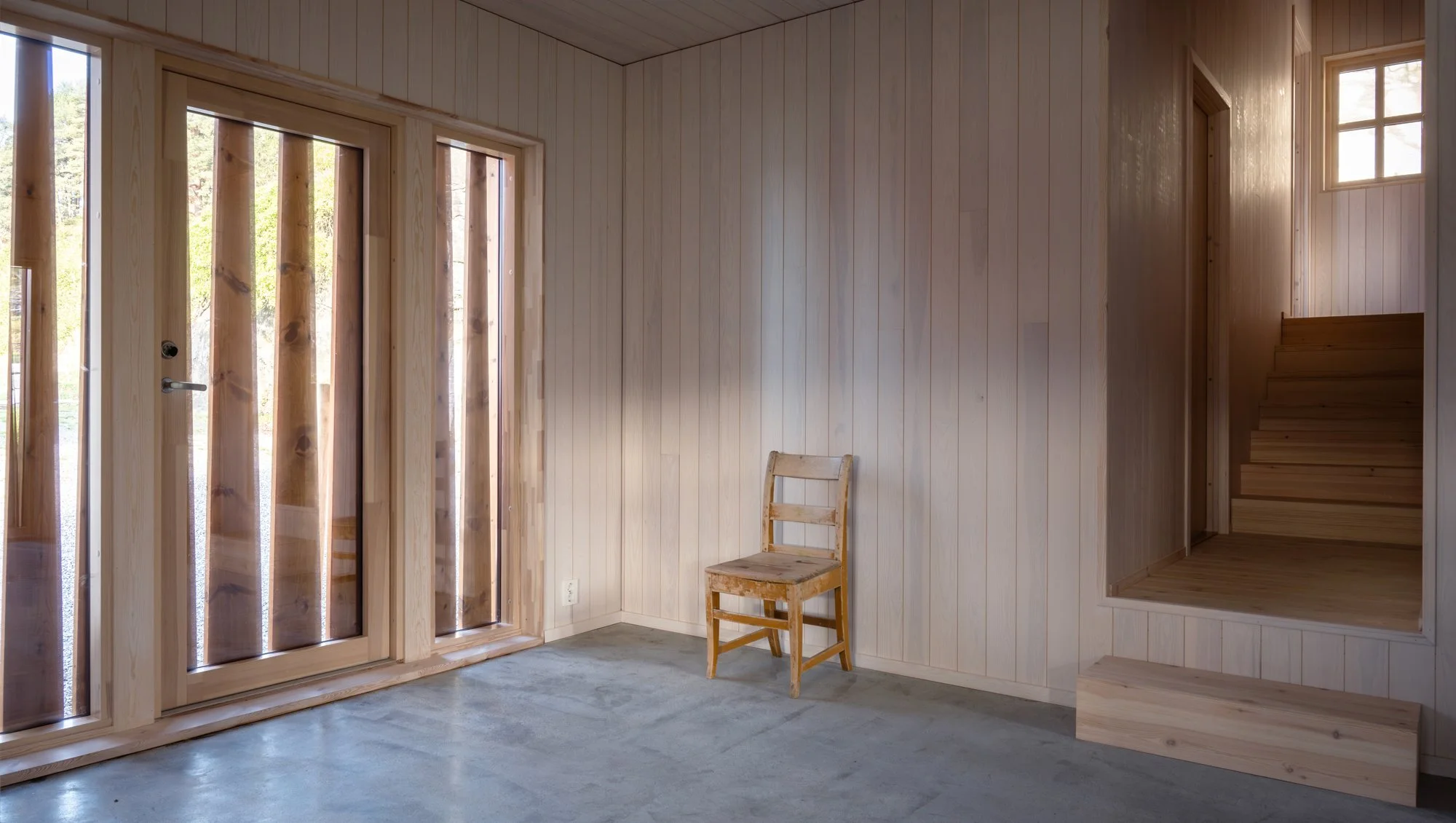
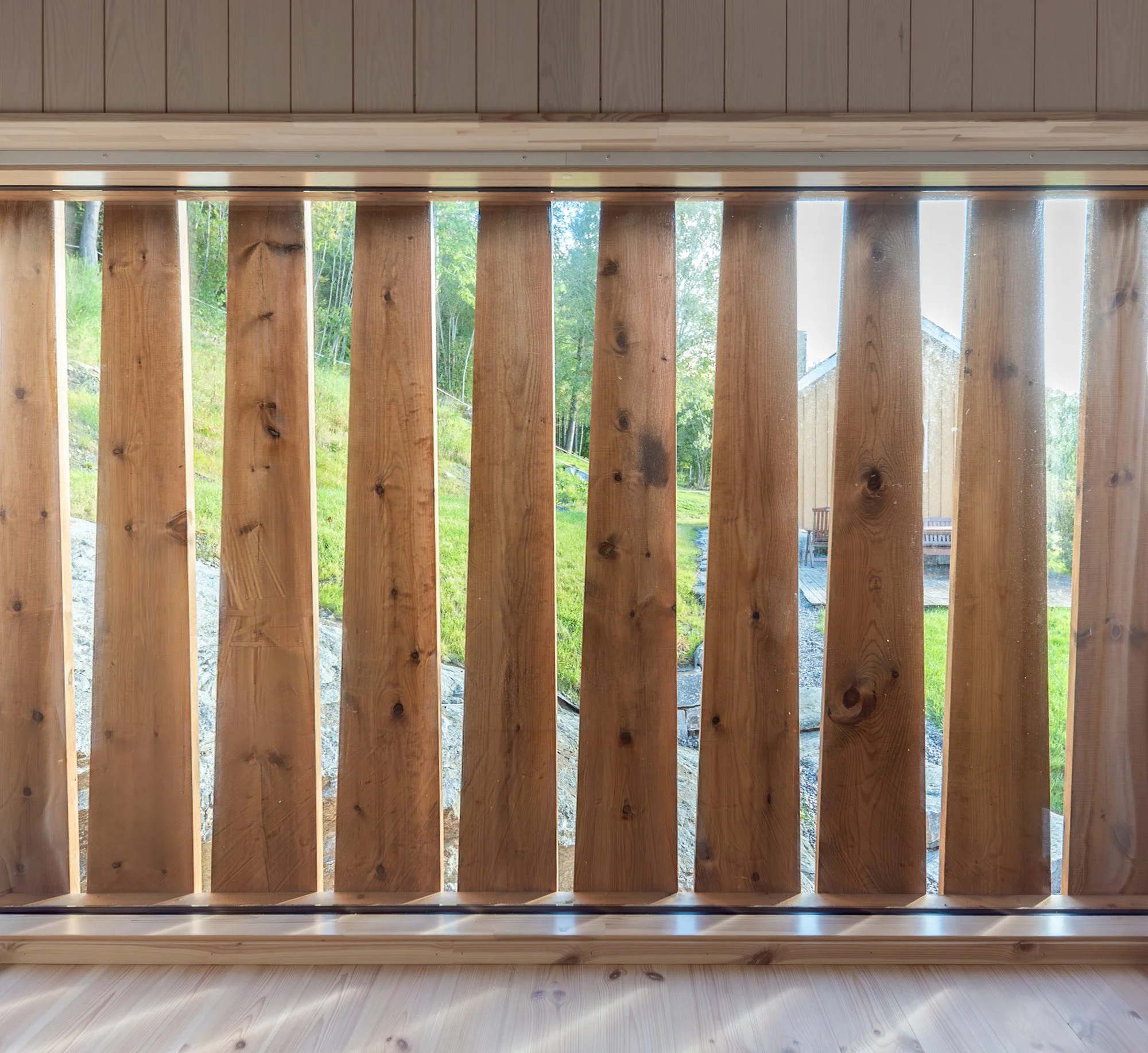
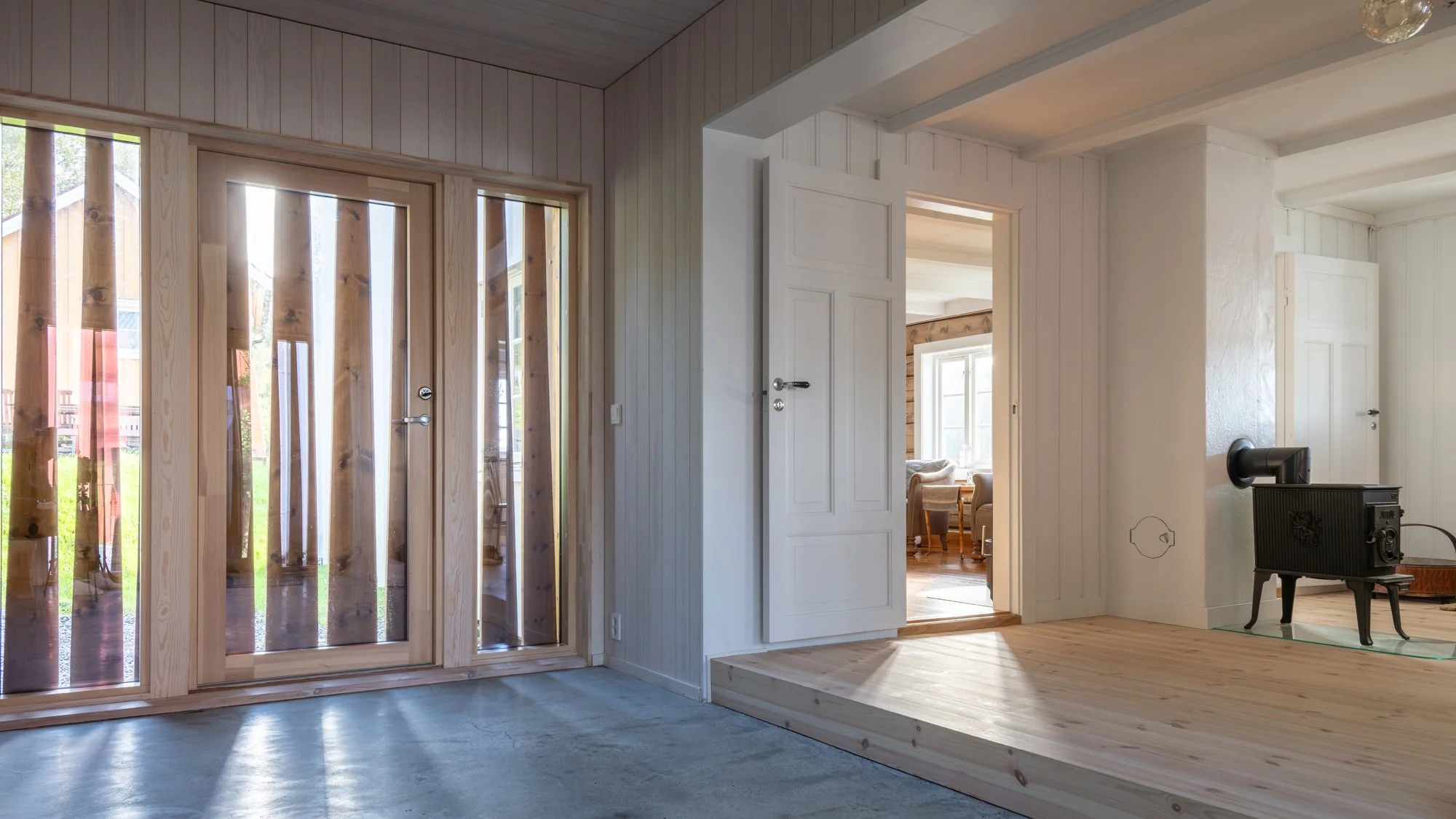
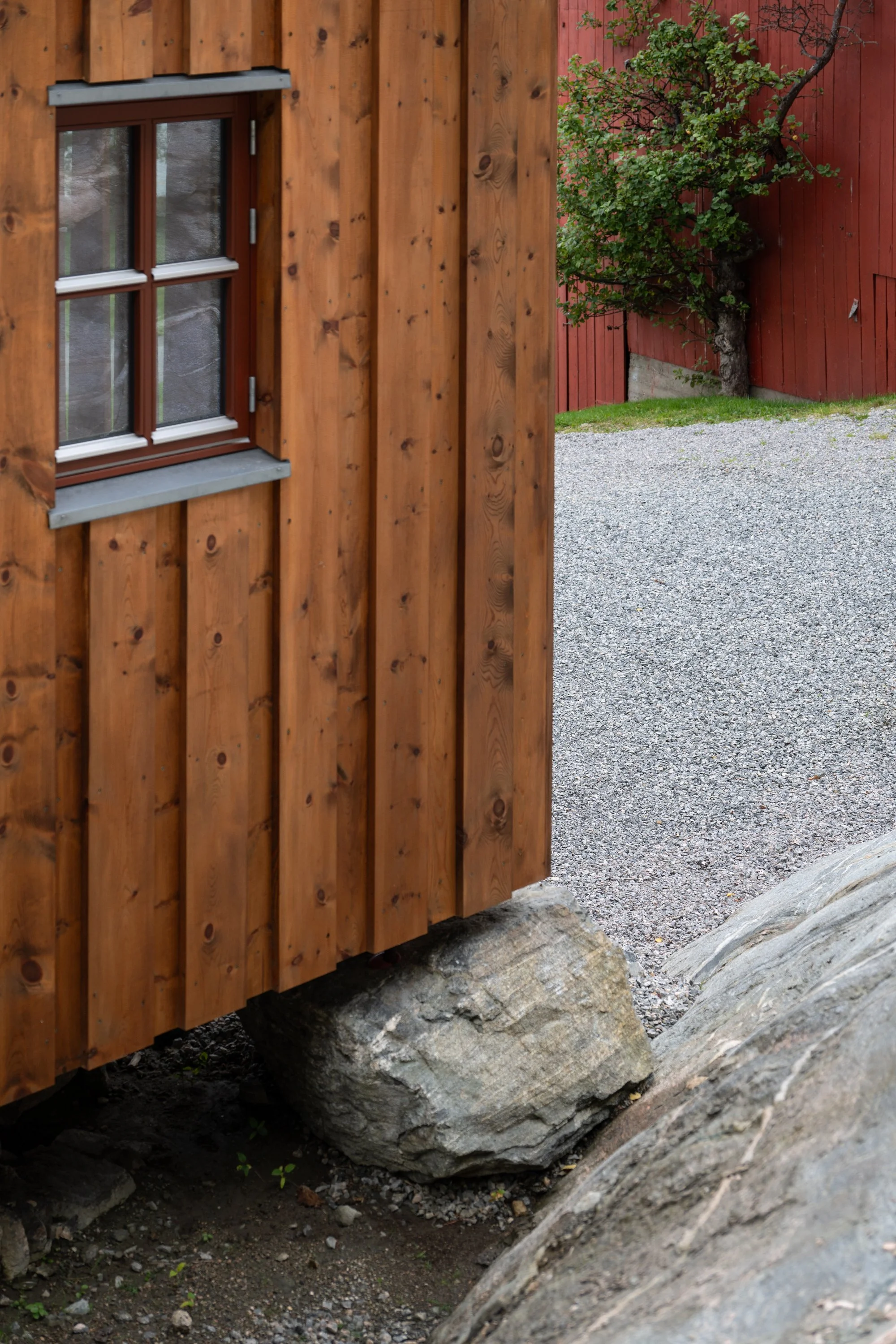
The exterior is clad in oiled, dense pine. In front of the larger windows, the façade boards are cut from the upper part of the trunk, where the tree naturally tapers. This subtle inclination shades the lower part of the windows and provides privacy, while allowing daylight to enter freely above. The principle — combining a simple observation from nature with a practical need for filtered light — was developed specifically for the bedrooms and bathrooms, where diffuse light and limited visibility are desired.
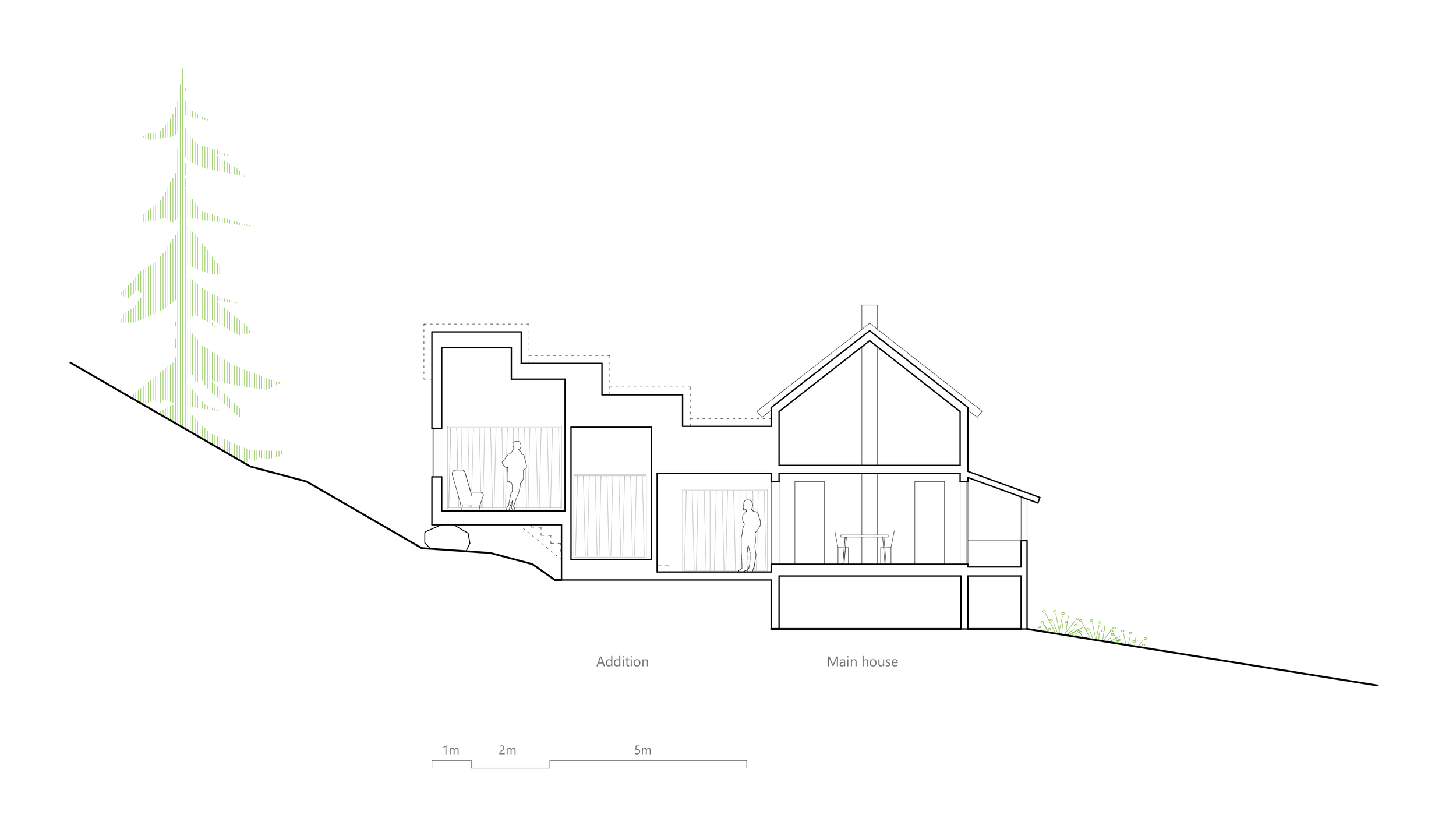
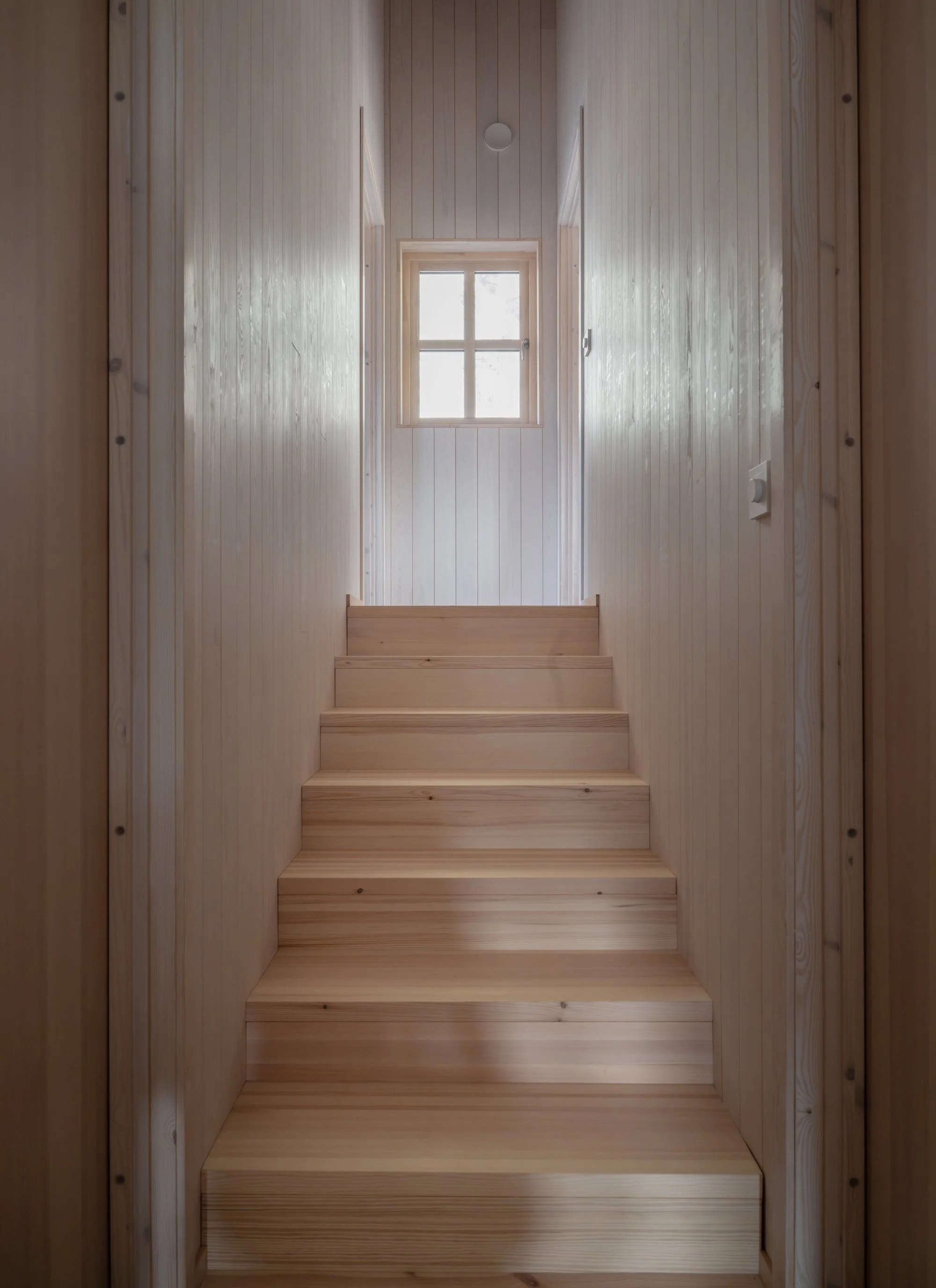
The building steps up with the terrain through four distinct roof planes that follow the contours of the site. The roof surface has a rhythmic incline with repetition of the same module, while the floor follows the interior layout. The roof is clad in aluzinc, chosen for its long lifespan and subdued tone. The wall surface and the high-quality timber treated with pigmented oil appear more significant and more deliberately emphasized than the roof surface — natural for something meant to be touched and smelled. Nevertheless, both materials and colors remain within the traditional and familiar.
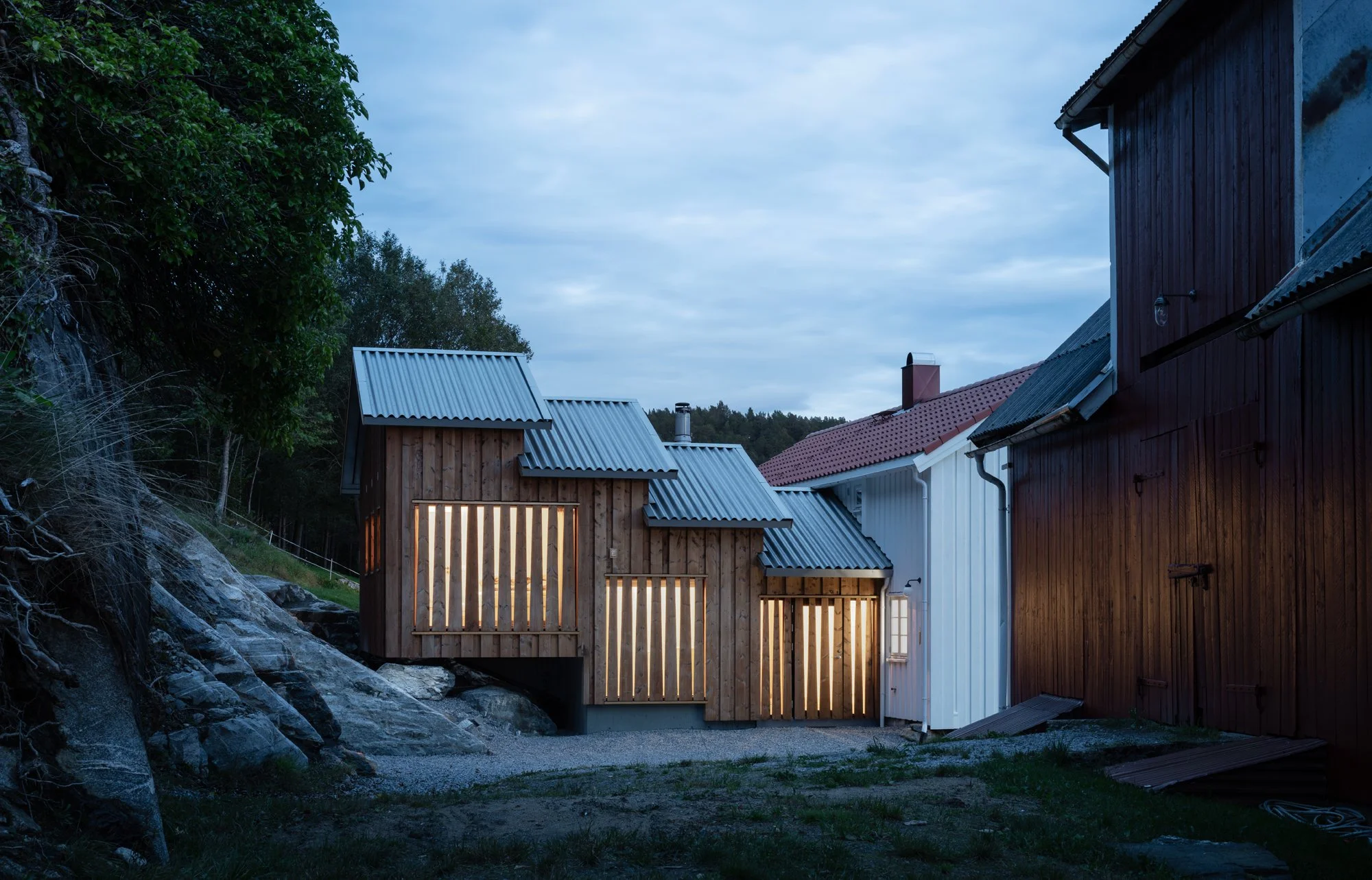
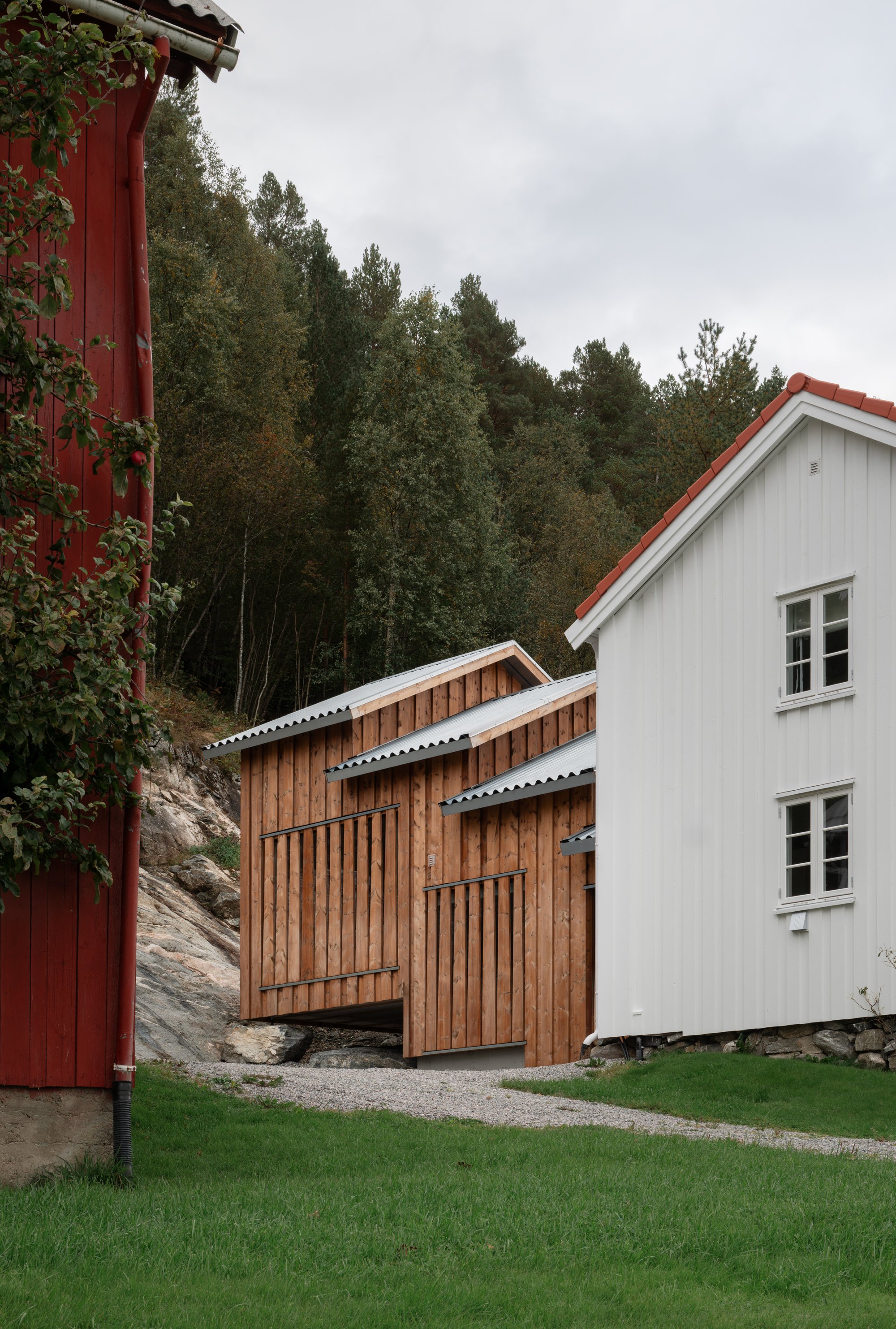
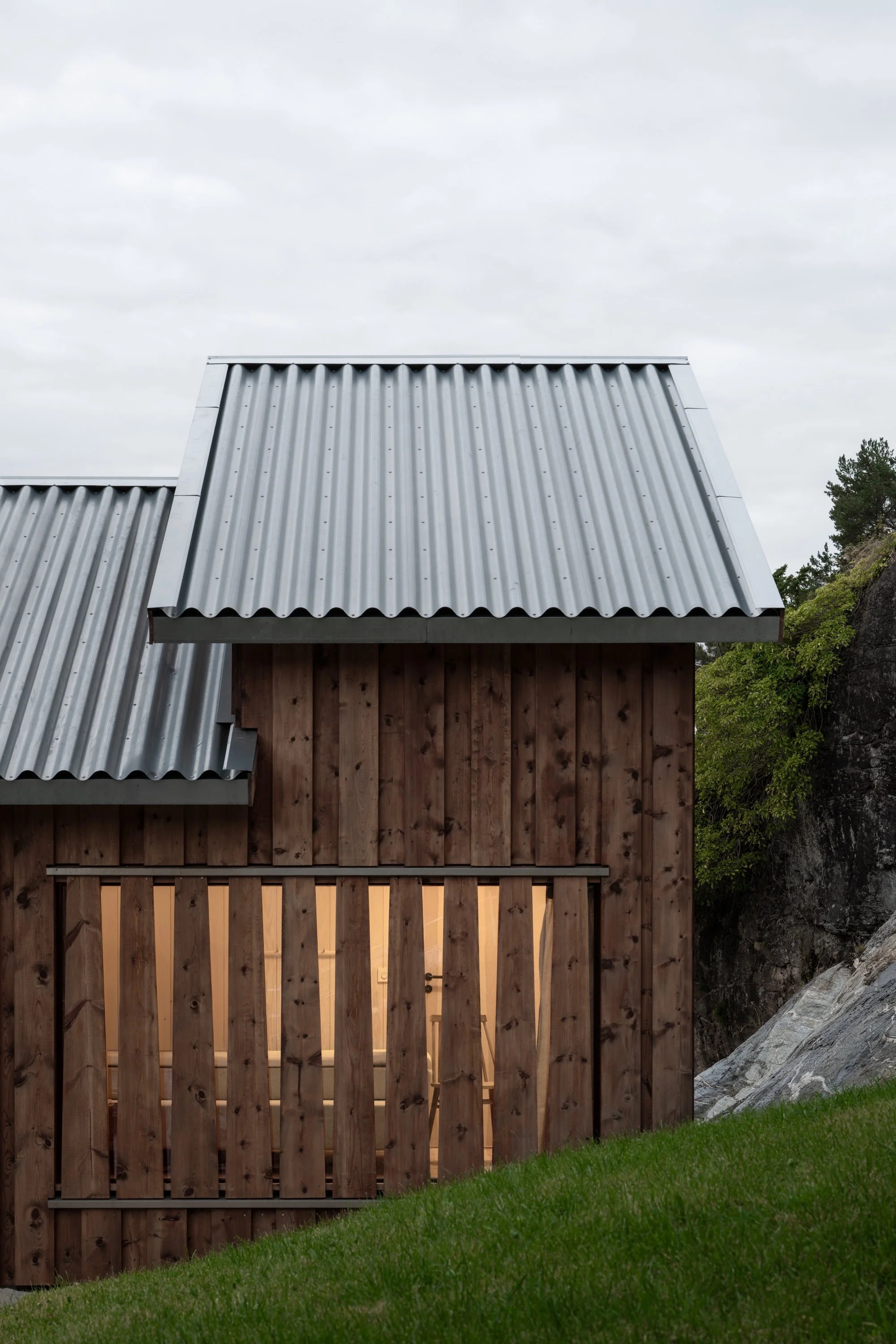
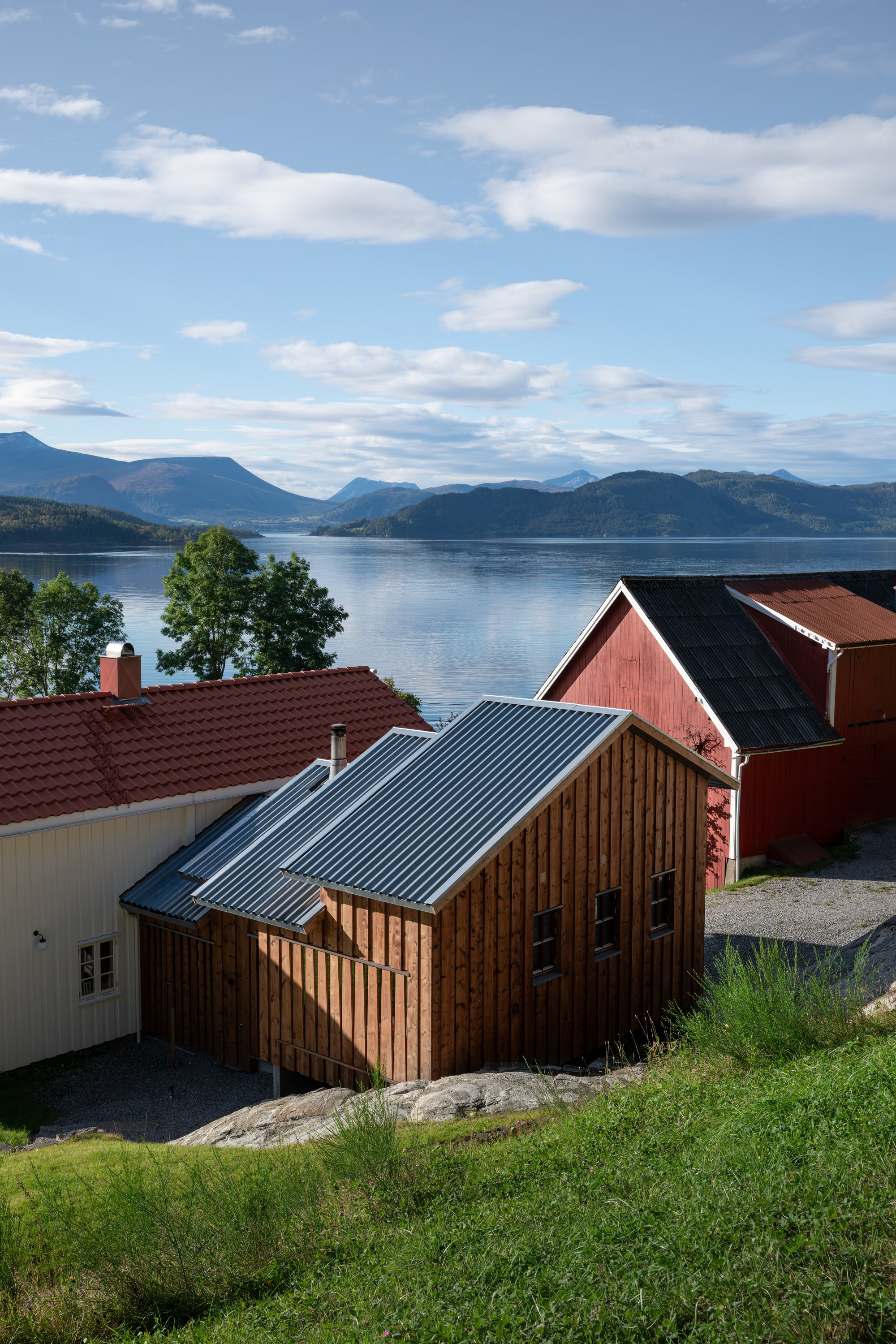
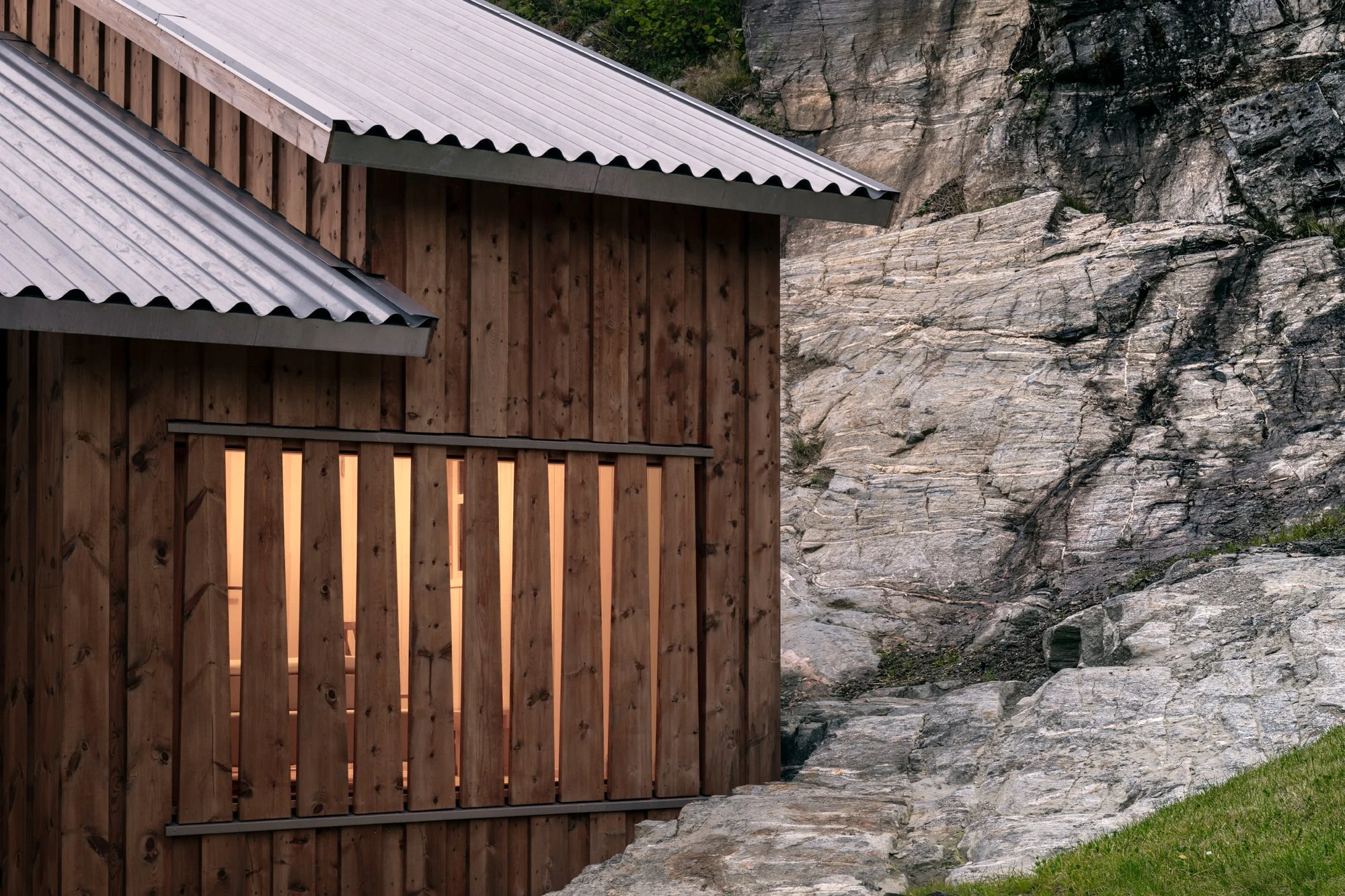
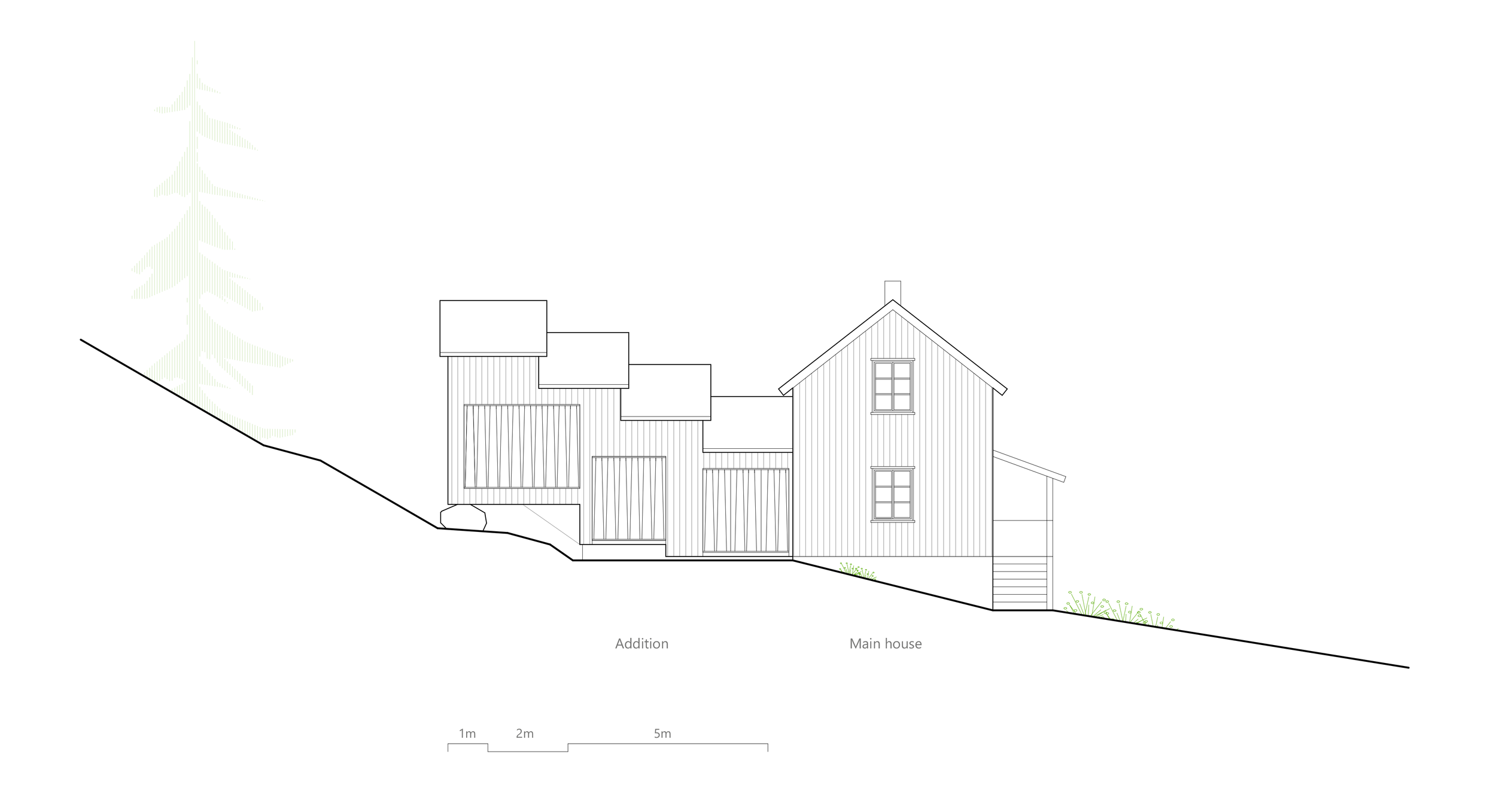
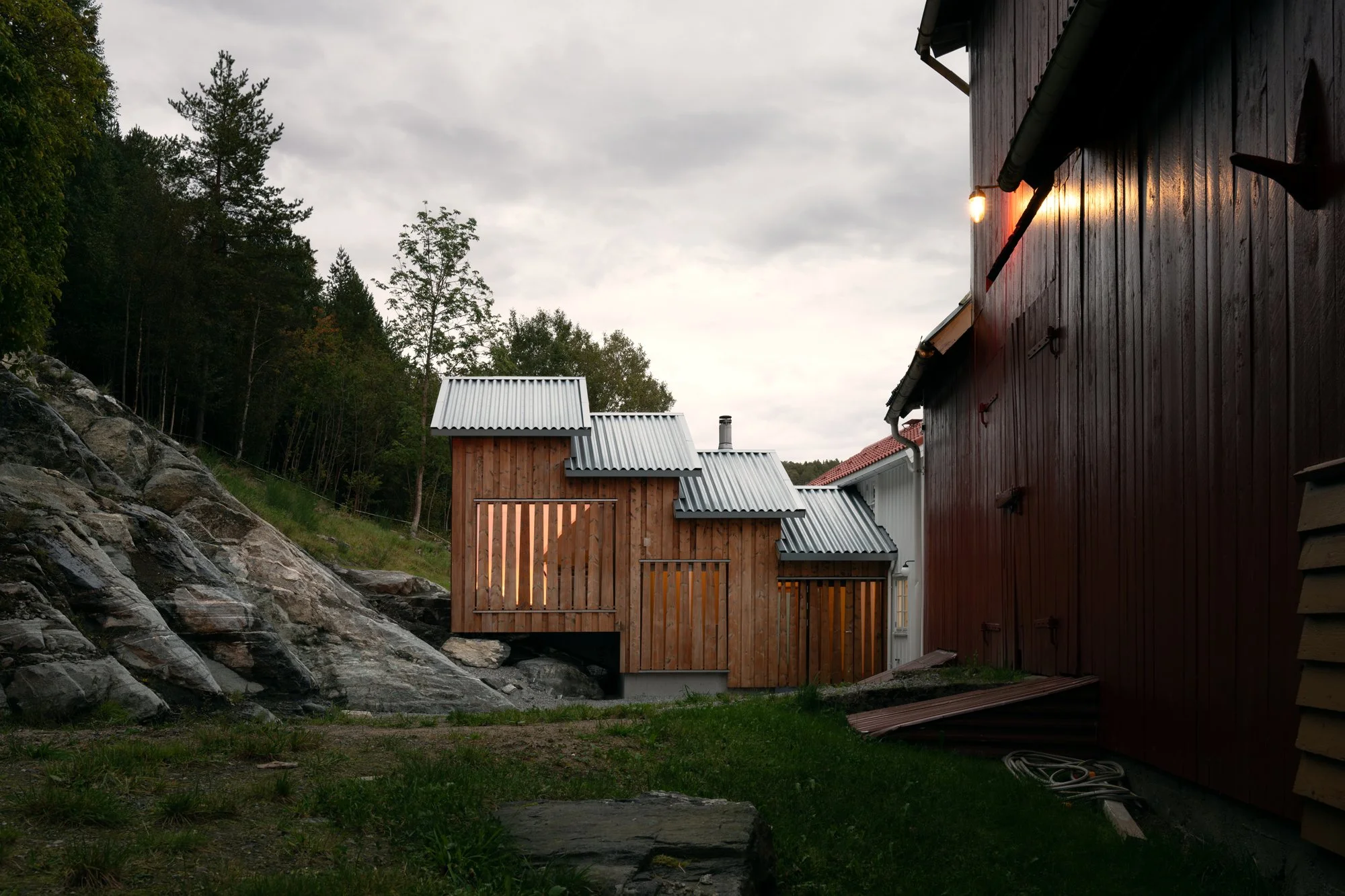
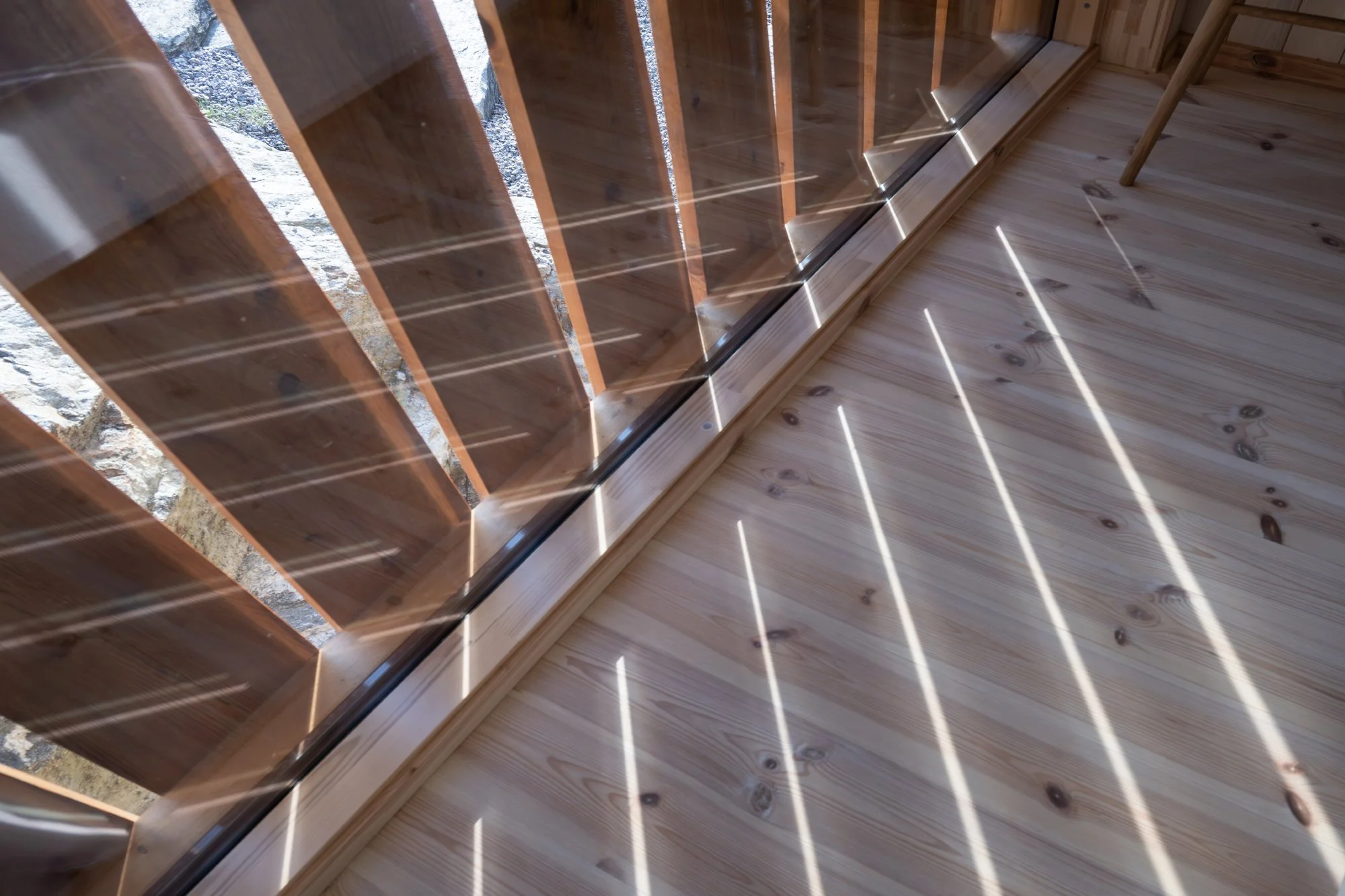
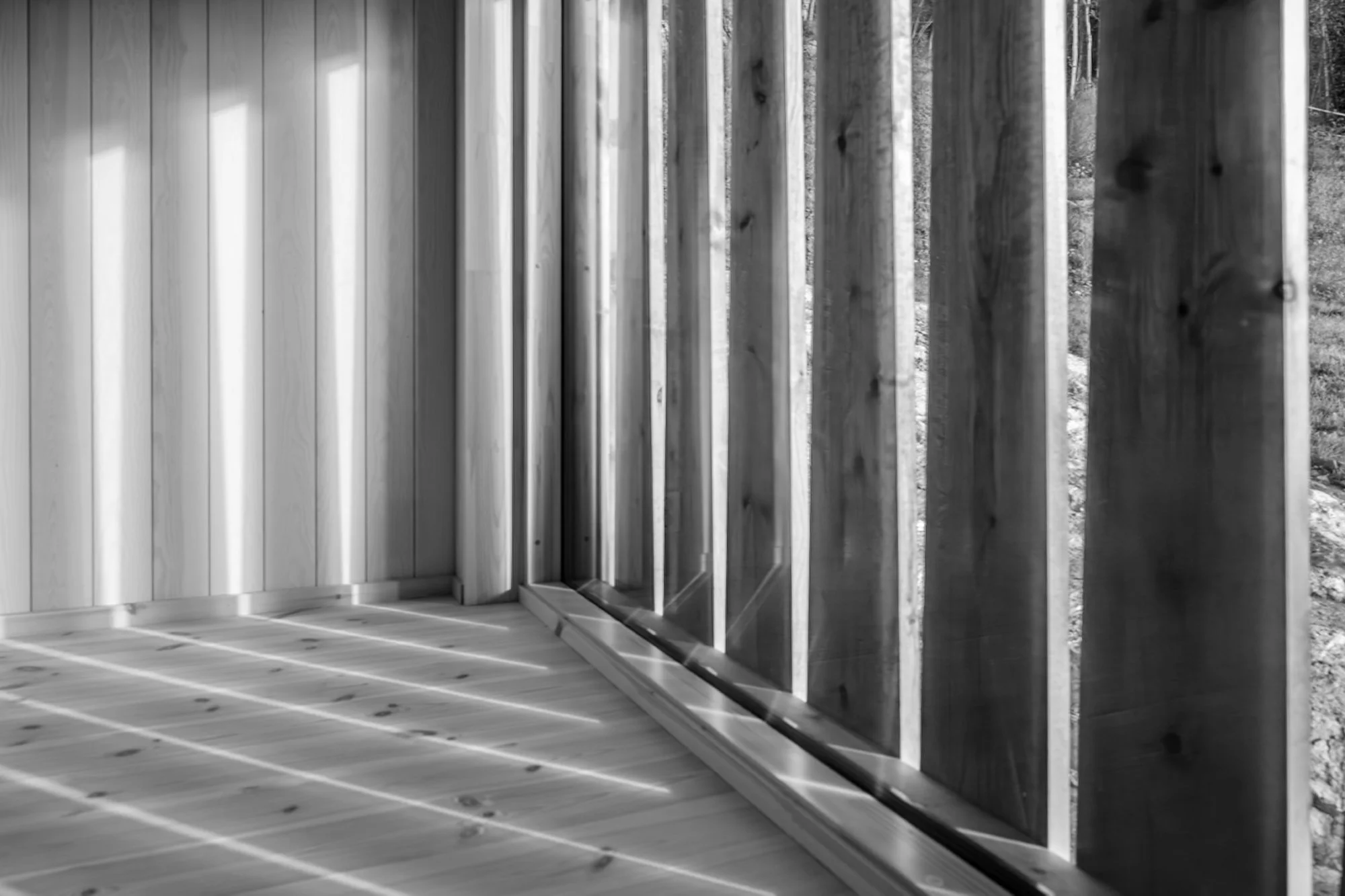
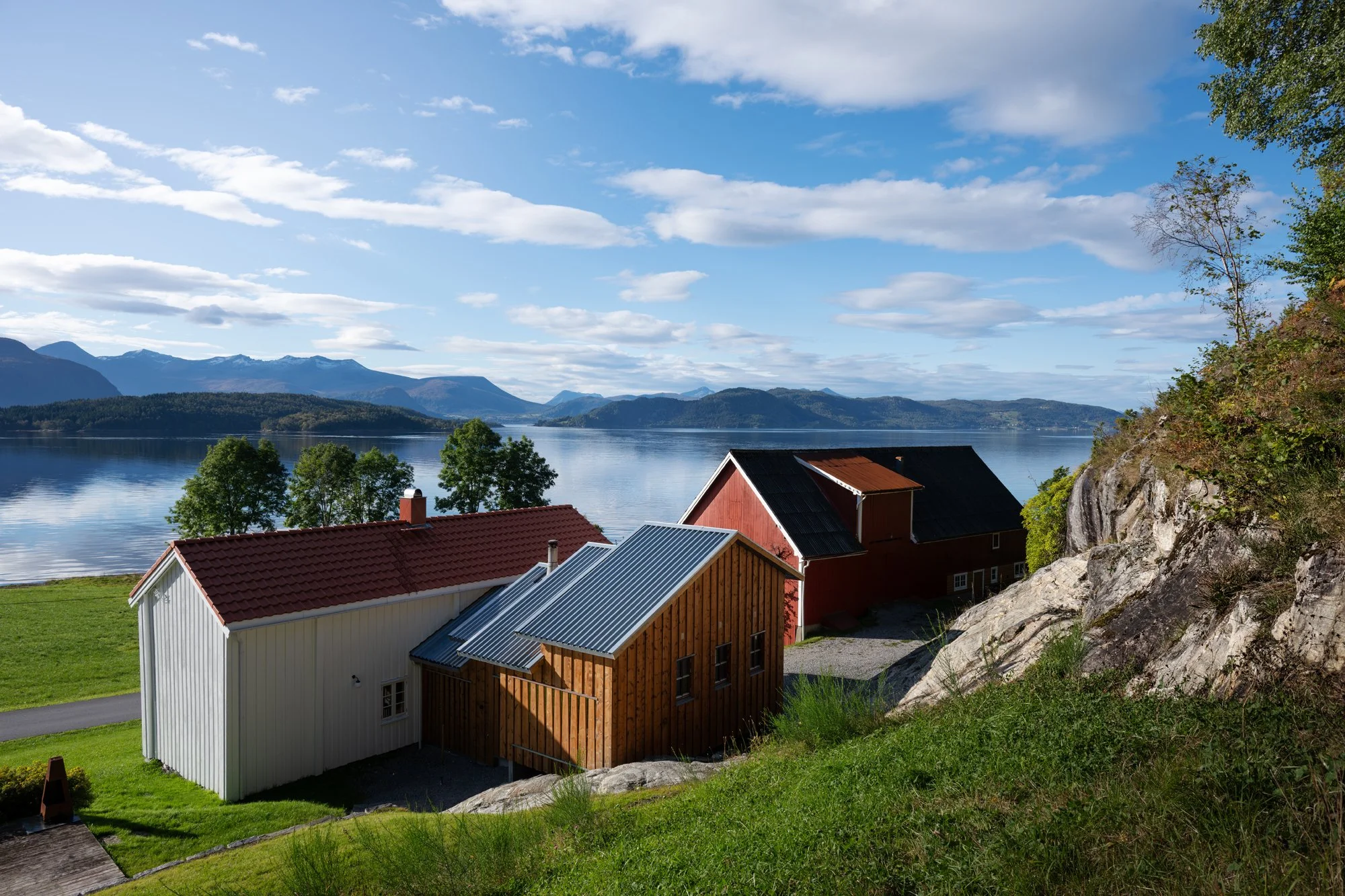
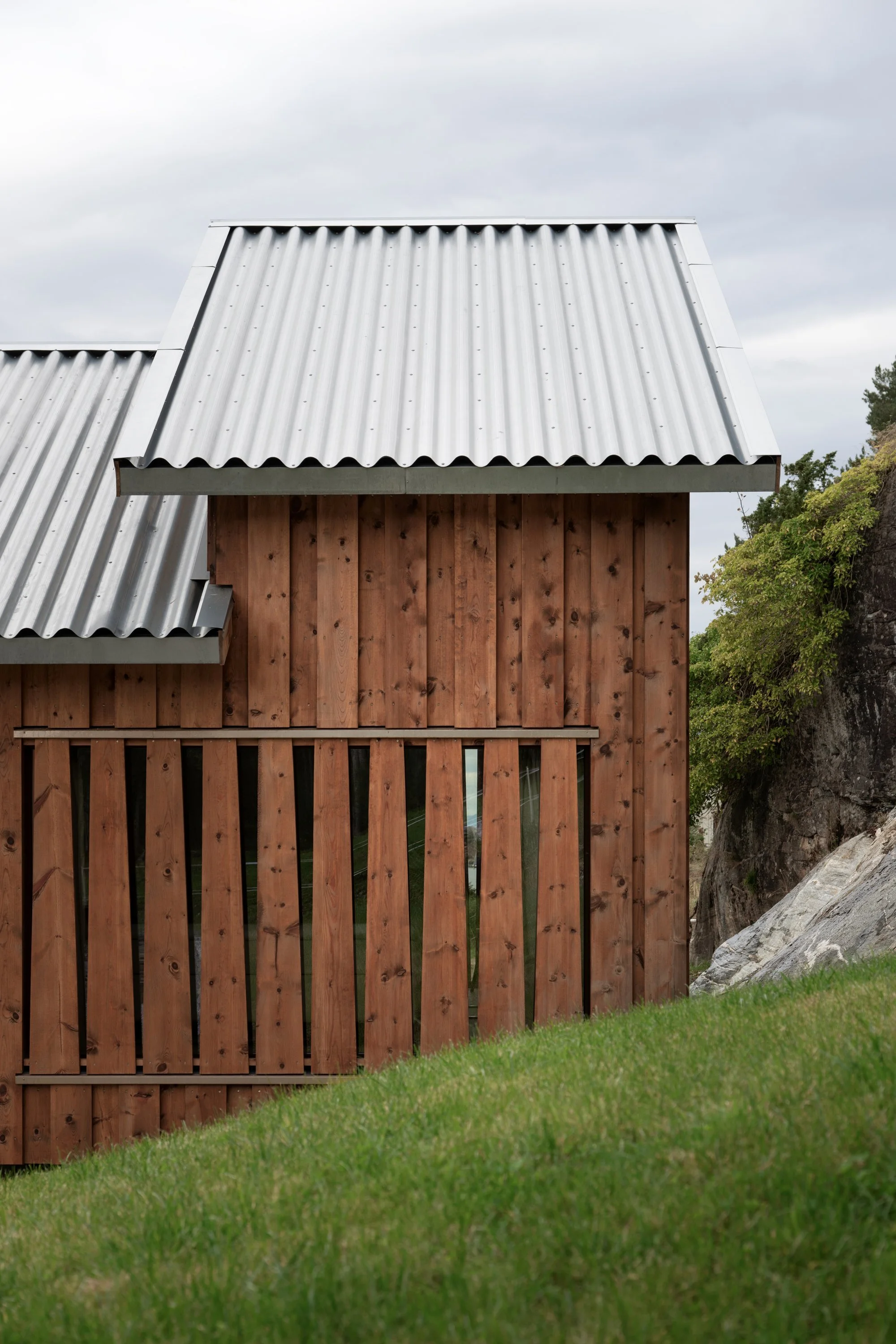
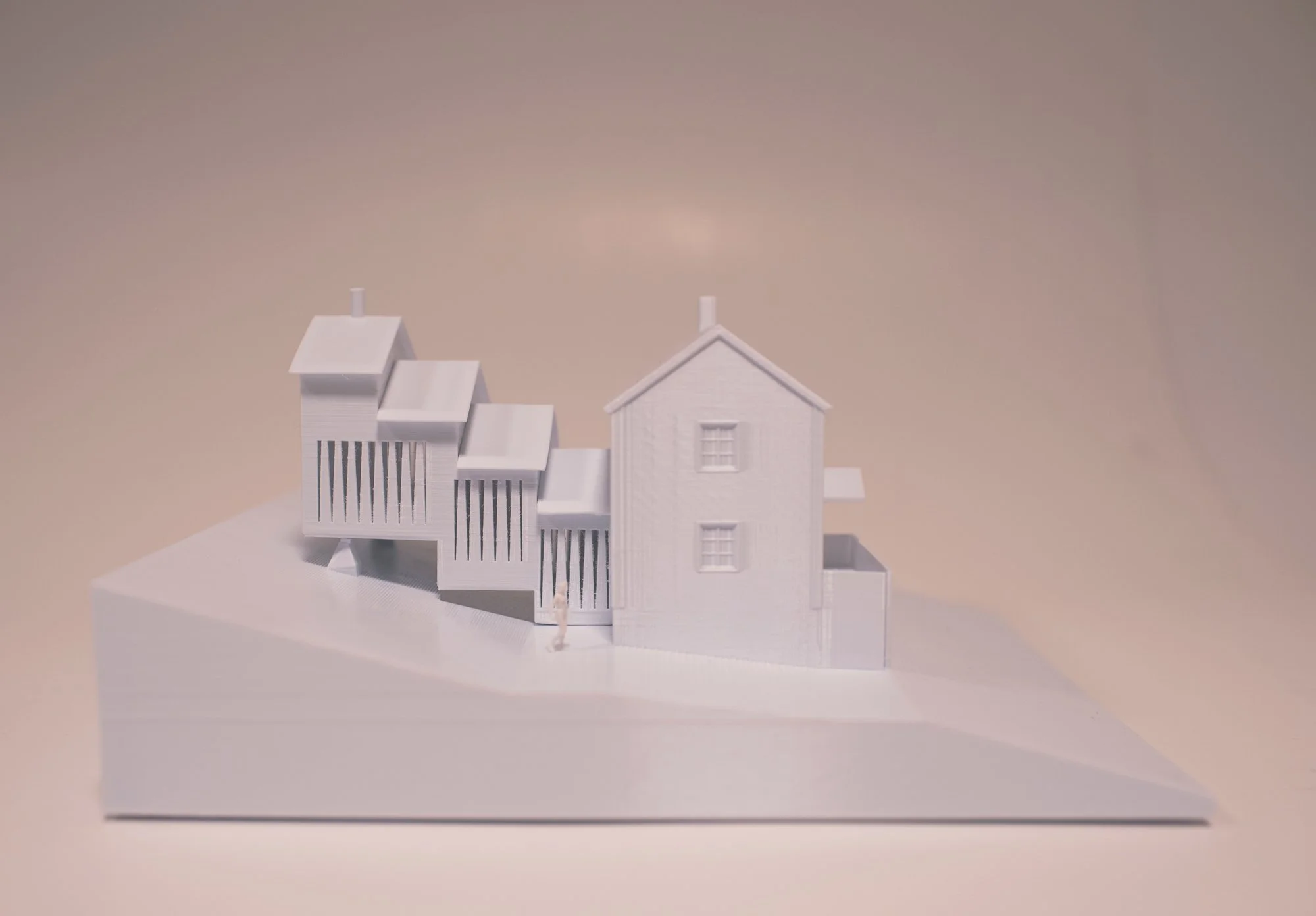
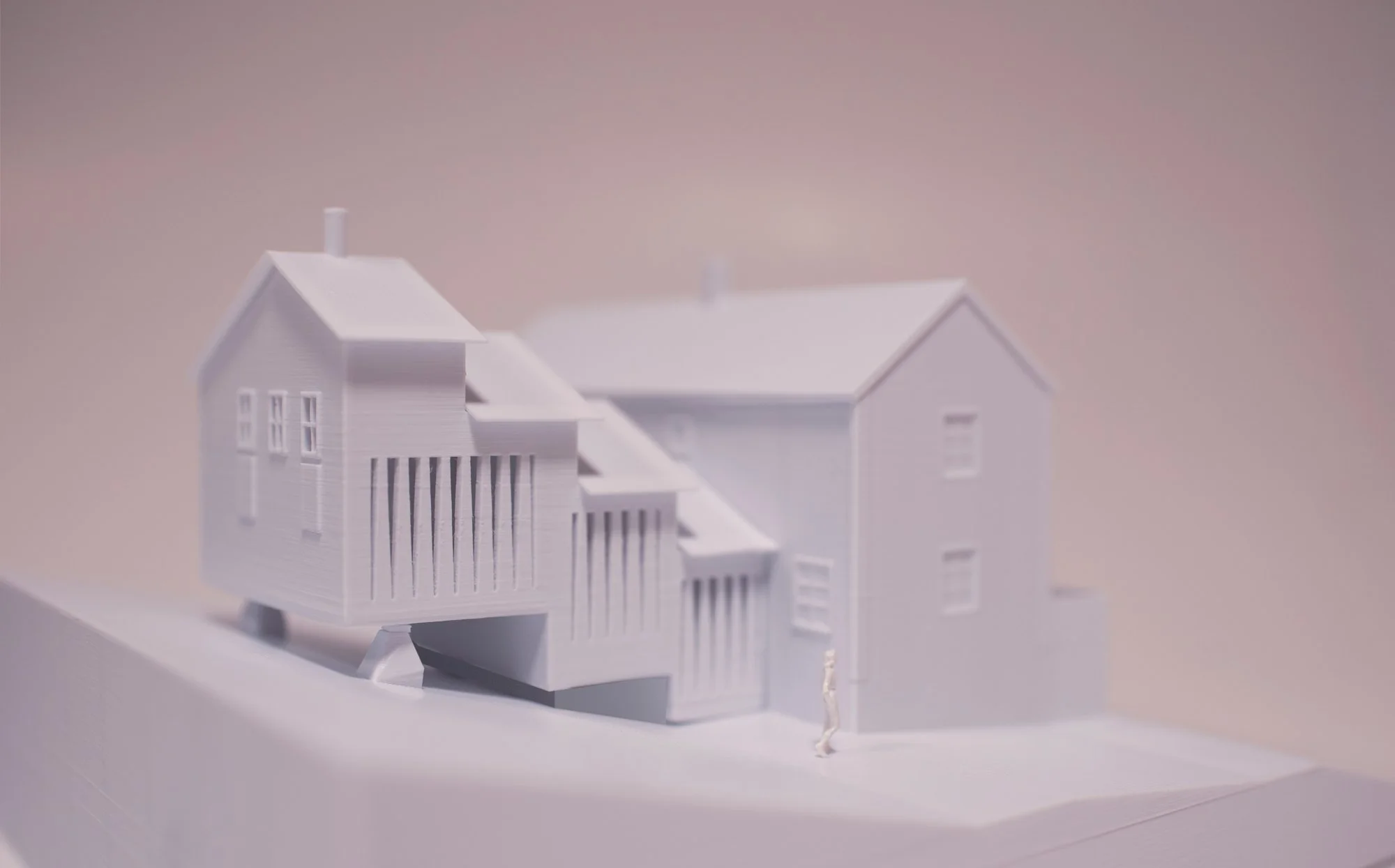
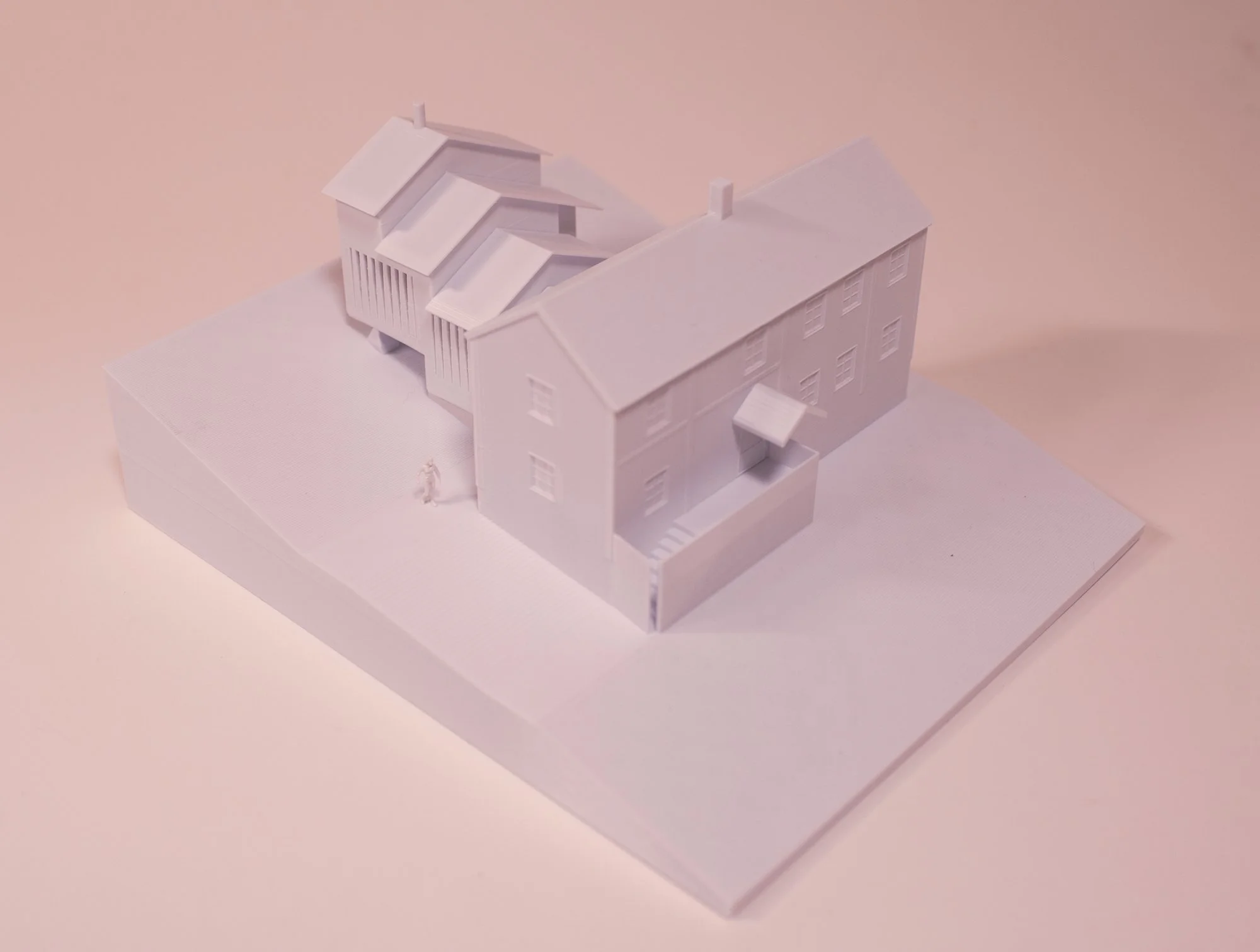
The use of gable roofs on the extension reinforces the sense of the ordinary. The repetition, stepped form, and slanted cladding boards are, however, less common in their application, even if the means themselves are familiar. The impression on site is therefore first one of recognition, followed by a hint of surprise — ideally evoking interest and curiosity.
In the evening, with light from within, the extension appears as a lantern in the dark. The visual experience in this state leans toward something simple and modern, with fewer layers and less complexity.
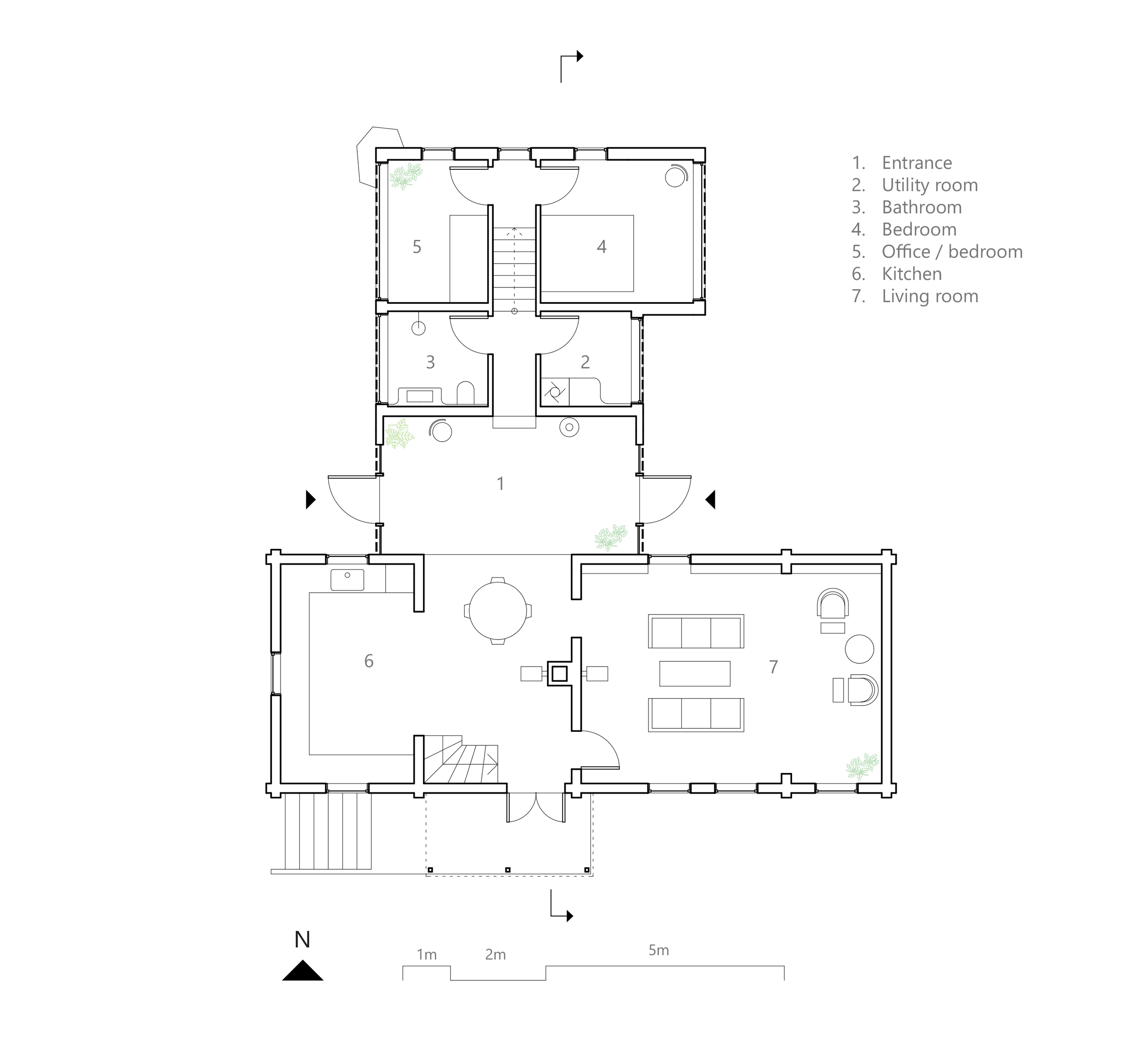
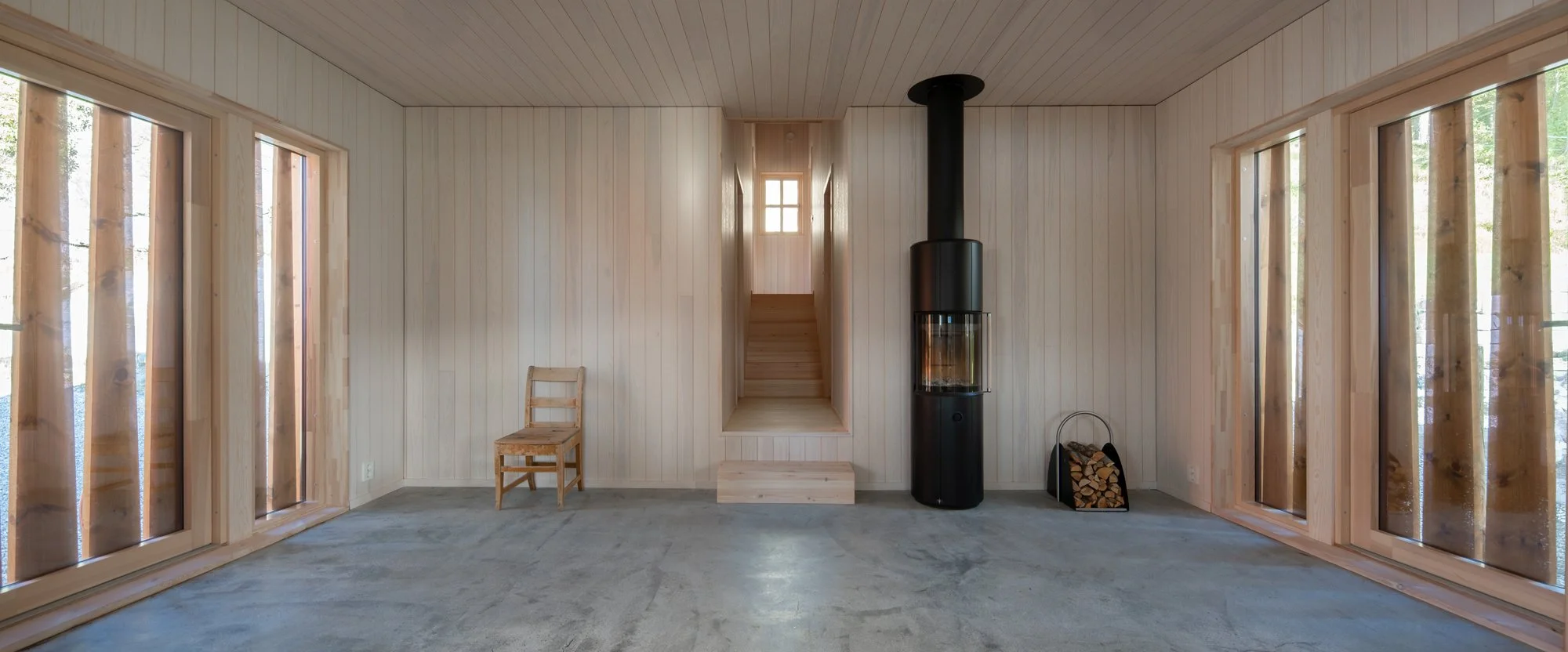
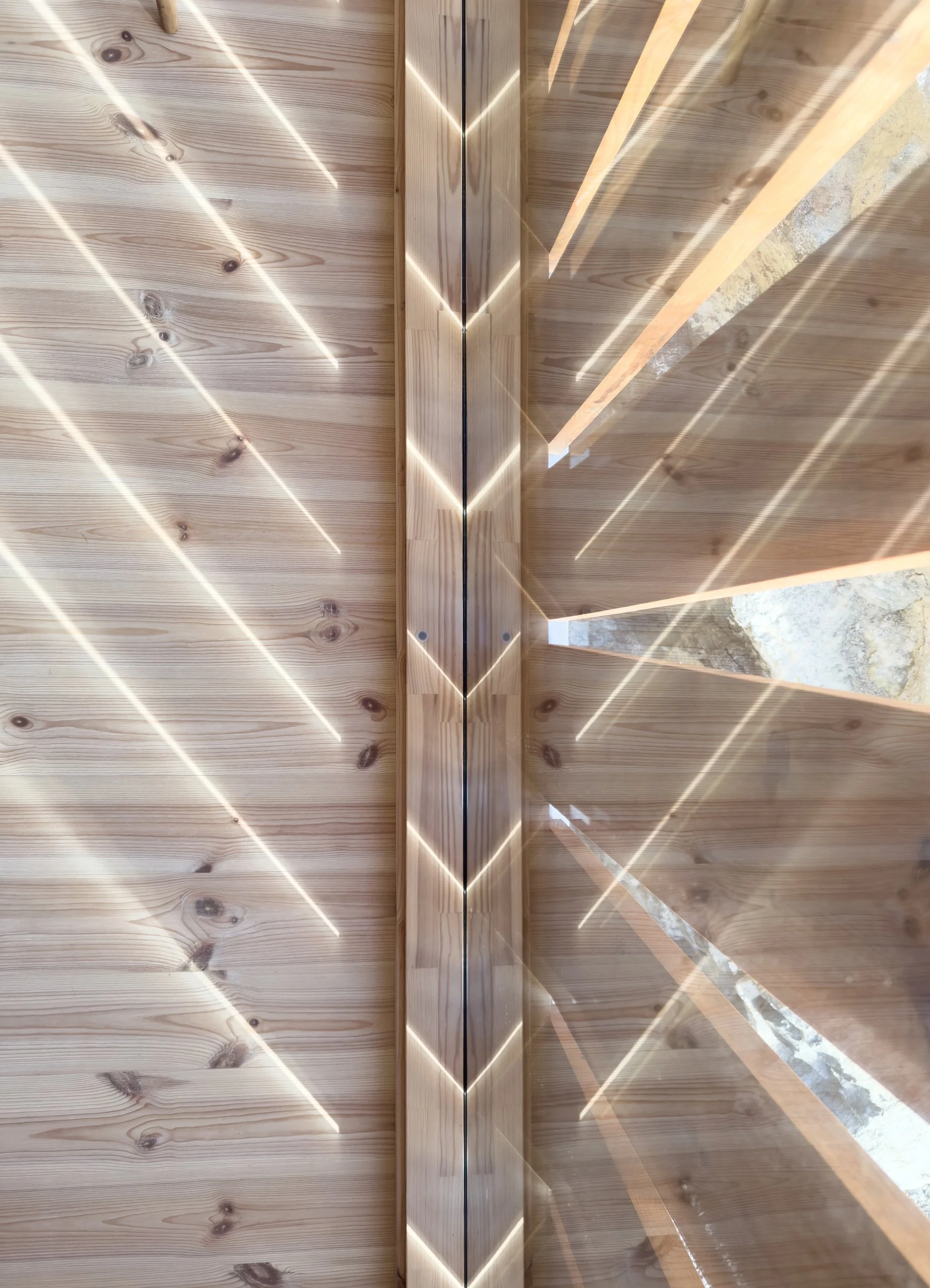
The new entrance area has a cast concrete floor, an energy-efficient wood stove that heats the whole house, and an open connection to the kitchen. Daylight enters along both the east–west axis across the entrance and the north–south axis from the veranda of the main house toward the rock outcrop beside the staircase. The cross-lighting along these two axes creates a bright and open interior despite the modest size of the rooms.
The type of foundation used for the extension corresponds to the functions of the interior spaces. Beneath the wet rooms lies a cast concrete slab that carries insulated pipes and ensures stable heating. Beneath the bedrooms, where a slightly lower temperature is desired, the floor rests on point foundations. This allows air circulation beneath the building and provides good drainage over the exposed bedrock. The strategy minimises the use of concrete. The project seeks to carry forward the existing qualities of the site while adding something new — something that belongs naturally to the place without becoming flat or overly predictable. The site’s original character still prevails.